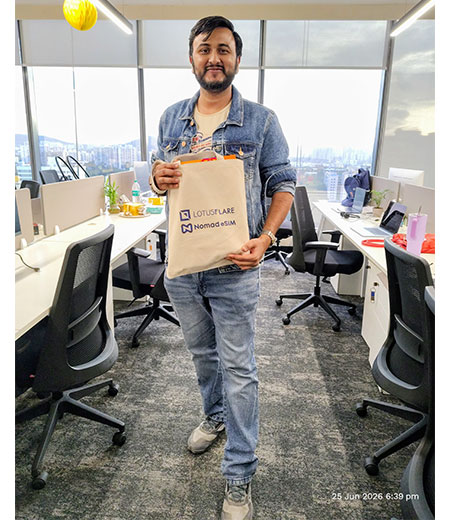
LotusFlare develops cloud-native Digital BSS and telecom monetization platforms that enable telecom operators to modernize charging, billing, and customer experience systems. As part of the Cloud Support Team, my role involves creating and maintaining technical and product documentation for global telecom operators and enterprise stakeholders.
Primary Tasks:
Technical Documentation
My primary responsibility at LotusFlare is to understand complex product features, workflows, and technical capabilities and translate them into clear, structured, and user-focused documentation. This includes creating and maintaining User Guides, API Documentation, System Administration Manuals, Troubleshooting Guides, Release Notes, and Visual Product Catalogues. The role involves working closely with Engineering and Product teams to understand new features, gather technical inputs, and convert them into documentation that is accurate, accessible, and aligned with the requirements of telecom operators and enterprise users. I work across the product lifecycle, from understanding a feature during development to documenting its configuration, usage, troubleshooting, and operational aspects.
Content Lifecycle Management
My responsibilities extend beyond creating individual documents to managing their lifecycle across product releases. I collaborate with Engineering, Product, UX, QA, and Support teams to gather inputs, incorporate feedback, improve information architecture, and ensure that documentation remains accurate and relevant as the product evolves. I am responsible for taking documentation from initial requirements and technical inputs through drafting, review, refinement, and final publication, ensuring that documentation deliverables are aligned with product development milestones and established publishing standards.
Visual Communication & Knowledge Enablement
A significant part of my role involves making complex technical information easier to understand through visual communication. I create diagrams, architecture flows, process flows, feature breakdowns, and other visual elements that improve comprehension and support product onboarding, configuration, and troubleshooting. I also support Customer Success and internal enablement teams by developing structured reference material and knowledge resources, helping reduce technical dependency, improve information accessibility, and enable users to better understand and adopt the product
Skylark Labs, Pune: Content And Proposal Writer
Skylark Lab’s core product line involves applications of Computer Vision Technology paired with a multi-sensor, multi-modal, hardware agnostic platform based on the ML framework. I was part of the Business Development Team, tasked with writing proposals to defence procurement agencies in the U.S. and Indian Defence Ecosystem
Primary Tasks:
Proposal Writing
In the Defence industry, Defence procurement agencies publish requirements for solutions to specific challenges through various industry platforms. Proposals are a documentation submitted by a Defence industry company to outline and detail their approach with product capabilities used to address the given problem statement.
To this end, my job at Skylark Labs entailed understanding various product lines and drafting a proposal which highlighted the use case of the product to solve the given problem statement. The proposal contains details about the applicable technology, scenarios in which it has been tested (machine learning model applied to the proprietary training data), and operational parameters.
Proposal Writing
Proficiency in creating technical documentation. This involved creating Product manuals, Technical volumes, White papers, Videos, Flowcharts, Quad charts, Technical illustrations, Cost volumes and Capability statements.
My primary task as a proposal writer involved obtaining inputs from the engineering team, researching on the relevant areas, and processing these inputs to make documentation that satisfies the problem statement requirements within technical capabilities and as per the Defence platform specific standards. I had control and ownership in presenting technical data from idea-inception to final presentation.
Door Steps School: Teaching Faculty
During my tenure as a Teaching Faculty Volunteer at Door Steps School, I actively contributed to the ‘Grow with Books’ School Intervention Program, which focused on providing remedial learning support to students. My primary objective was to enhance the learning outcomes of the students by focusing on strengthening their core literacy skills in reading and writing. Through personalized teaching strategies and targeted interventions, I worked to support students in improving their academic performance and overall literacy proficiency. My role involved creating engaging learning environments, developing tailored lesson plans, and providing individualized attention to students to help them overcome academic challenges and excel in their literacy skills.
Within the ‘Grow with Books’ program, I strived to create a nurturing and inclusive educational experience for students, aiming to empower them with the essential literacy skills needed for academic success and personal growth. By fostering a supportive learning environment and implementing innovative teaching methods, I endeavoured to instill a love for reading and writing in students while equipping them with the tools to enhance their literacy competencies. My commitment to the educational development of the students at Door Step School was driven by a passion for promoting literacy and empowering young learners to achieve their full potential through education.
Non-Water Sanitation: Data Research Analyst
As a Data Research Analyst for Non Water Sanitation, I played a key role in their efforts to promote improved and sustainable sanitation solutions in Pune district. The organization’s mission is to facilitate better sanitation practices that can enhance health, hygiene and ultimately save lives. To support this goal, I was part of the team, which conducted a comprehensive sanitation survey across 10 villages of Pune District.
The task involved interviewing households, surveying facilities, assessing the source of water and its availability, to gather critical data on the state of sanitation and hygiene in these communities.
This in-depth assessment went beyond just examining the access to facilities. It focused on the entire sanitation service chain – from waste containment and emptying, to transportation, treatment and safe disposal. The exercise also involved spreading awareness about the importance of proper sanitation facilities, and its impact on overall health of the individuals.
The insights gained from this survey will help the NGO and local authorities identify gaps and develop targeted interventions to improve sanitation infrastructure and practices.